


September 24, 2015
For this week’s blog, we share reflections from Program Officer Myriah Cornwell, who recently traveled to Durban, South Africa, to attend the World Forestry Congress.
What is a forest? What do you see when you think of a forest?
What about even rows of the same type of tree stretching as far as the eye can see? Is that a forest?
Who has the authority to define a forest? Who is authorized to speak on behalf of forests?
These questions were at the forefront during the XIV World Forestry Congress (WFC) held in Durban, September 7-11. The answer to the question of who is authorized to speak on behalf of the forest, based on those in attendance at WFC, seems to point to those with financial means and official credentials. The entrance fees (US$353) were steep for grassroots nonprofits, especially those operating in developing countries with limited budgets. Security was tight. To enter the venue, attendees had to show their photo ID badges and pass through a metal detector. Security guards were stationed at each entrance to the venue. This made for a meeting of government officials, business representatives, academics, and delegates from large NGOs that could afford entrance—leaving out the perspectives of grassroots communities on the frontlines of logging and deforestation.
Down the road from the WFC, at the Durban Botanical Gardens, a different gathering on forests came together. Organized by Timberwatch, the Civil Society Alternative Programme (CSAP) convened the activists and community groups marginalized by the WFC. Forest dwellers and farmers came from nearby areas of South Africa, where they were joined by activists from countries such as India, Germany, Brazil, and Kenya. In presentations and panel discussions, they challenged the WFC’s official narrative of forests. A statement I heard throughout the CSAP: monoculture plantations are not forests.
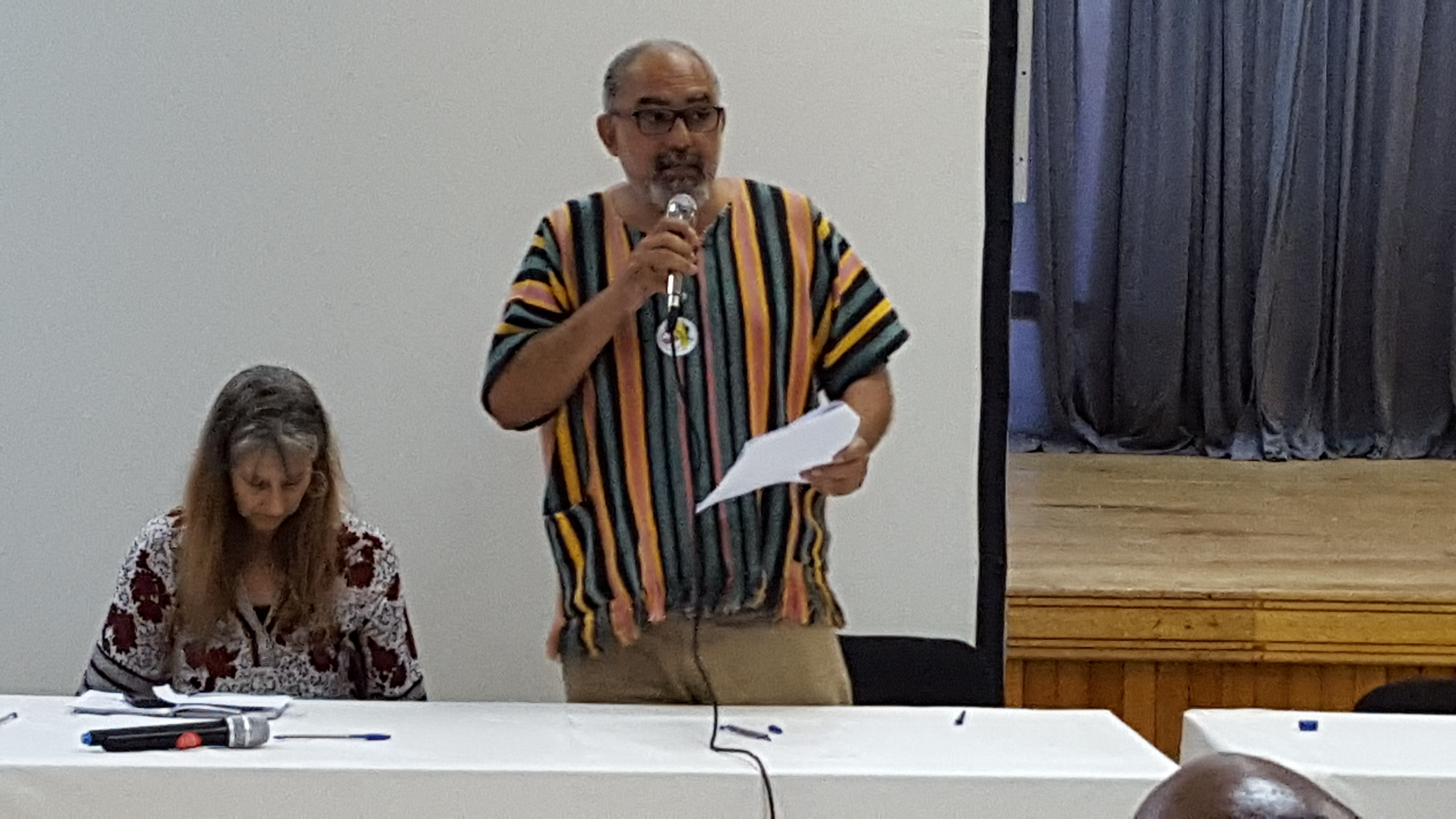
A few groups and activists crossed over from CSAP to the WFC. Notably, Wally Menne, the main organizer of CSAP, raised a ruckus in a WFC panel, confronting representatives from Forestry South Africa, South Africa’s largest timber association, over what he called “fake forests”—plantations that are certified by the Forest Stewardship Council as responsibly managed, but appear to be monoculture tree farms. Plantation ‘forests’ are comprised of a single species of tree, contain no biodiversity of fauna and flora, and often require managed interventions in the form of fertilizer, herbicides, and pesticides.
Greenpeace-Africa raised awareness about the forests of the Congo Basin at both conferences. At the WFC, I attended their insightful panel on the limited regulatory capacity of governments in the Congo Basin and the need for third-party verification of the legality of Congo-harvested timber. Panelists actively engaged audience members from the Chinese Academy of Forestry on how Chinese timber companies could work with conservationists, given that China is the largest market for Congo-harvested timber.
Unfortunately, this session was allotted the 7:45-9 p.m. timeslot on an evening when the WFC was shuttling attendees to a beach party. Several police officers entered the session to ensure that Greenpeace-Africa was not launching any disruptive ‘action.’
When community groups are marginalized and the voices of activists shouted down, forests become defined by a singular authoritative vision. Civil society is fenced off from forests—and their recourse is to take to the streets. And CSAP attendees did just that—Goldman Environmental Prize winner Desmond D’Sa organized a march of over 2,000 students from the greater Durban area. Starting at Durban city hall, these students marched to the WFC—or as close to the WFC as officials would allow—to tell the world what forests mean to them.
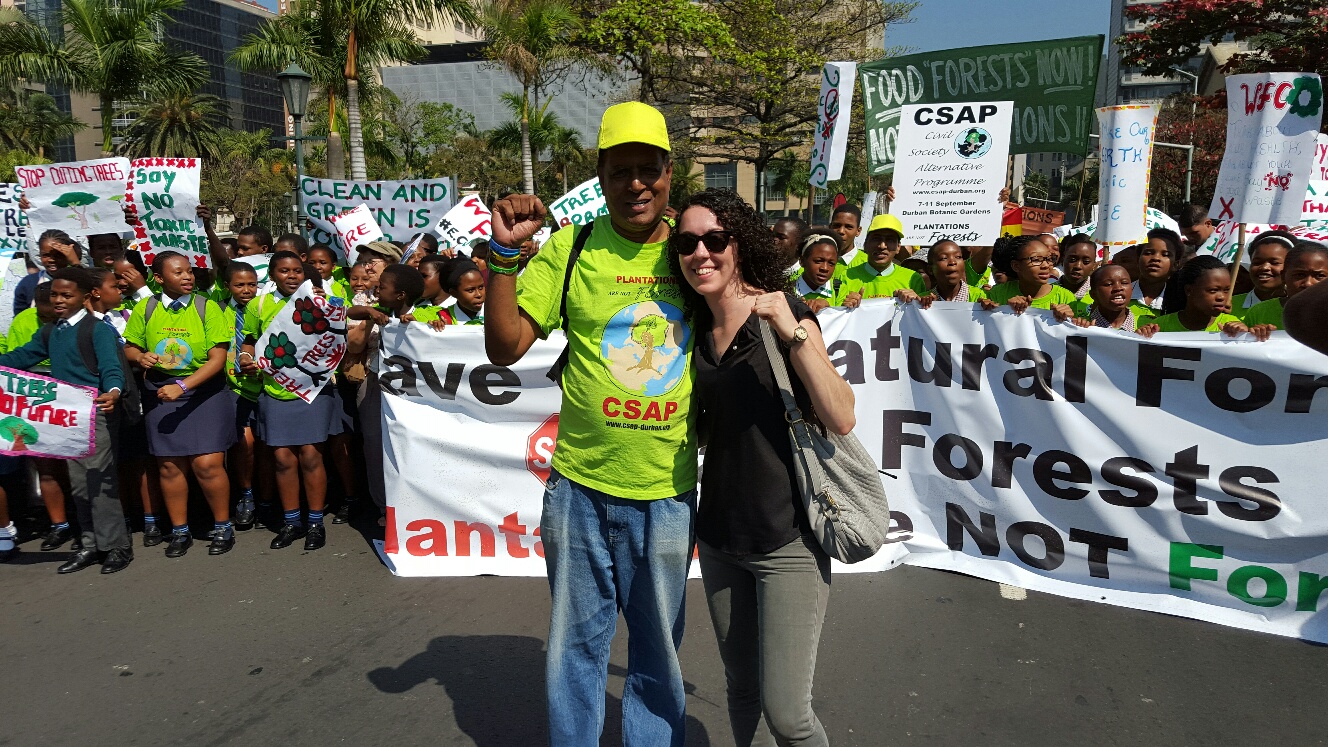
As activists and students shut down city streets, I was inspired by the positive energy of the marchers, but I thought that they should be heard without having to shout. If the WFC seeks to be as representative of sustainable forestry as it claims, grassroots activists from forest communities should have guaranteed roles in the meeting—or risk becoming as bleak as a monoculture plantation.


